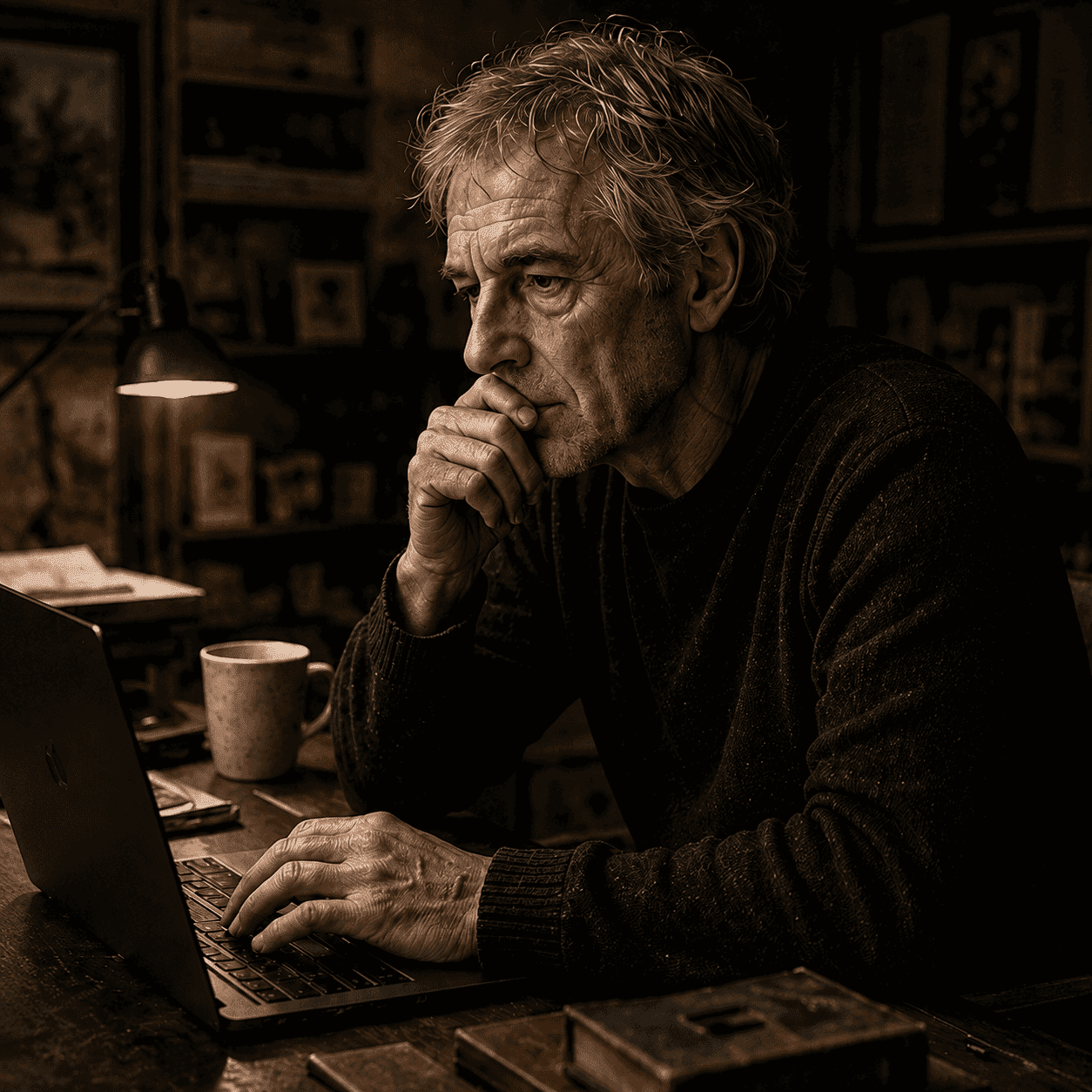
My name is Aris Thorne.
I was born in Tal-y-Cafn, North Wales, in 1963 and grew up between the coast and the hills and valleys that lay beyond. My grandmother Margaret raised me, mostly. I spent my childhood in a world of seaside summers, chapel fêtes, old photographs and stories that belonged more to memory than to history books.
Like most people, I expected life to follow a sensible course. It did not.
After leaving school I worked in a variety of ordinary jobs before discovering that I had an unusual talent for asking awkward questions and noticing details other people had stopped looking at. As computers and digital systems became important, I found myself drawn into work concerned with records, investigations and the uncomfortable relationship between technology and truth.
I became known for patience rather than brilliance. I preferred facts to theories, disliked unnecessary certainty and developed a reputation for quietly uncovering things that others would rather remain forgotten. I never considered myself remarkable and remained suspicious of people who described themselves that way.
The work brought me into contact with organisations, archives and emerging technologies, and eventually into questions that few people seemed interested in asking. What happens when memories become records? What happens when records become systems? What happens when systems begin making decisions that nobody fully understands?
Those questions occupied much of my professional life, though they cost more than I usually admitted. Relationships failed. Friendships drifted. Some regrets remained stubbornly unresolved. Through it all, I kept returning to North Wales, where familiar places, changing weather and the sight of the sea provided the comfort that certainty never could.
In later life, following Margaret's death and the discovery of a collection of notebooks, diaries and forgotten recordings, I found myself confronted by questions that were no longer professional. The past, which I had spent decades treating as evidence, became something far more personal.
What began as an attempt to understand the life of one ordinary woman drew me into mysteries stretching across generations, and into the strange ways technology preserves, distorts and sometimes resurrects the voices of those who are gone.
I still live in the house in Tal-y-Cafn where my grandmother raised me. Work and life took me elsewhere for many years. I came back. I continue to investigate what technology does to truth and memory, though increasingly I suspect that the answers matter less than the people I find along the way.
I remain unconvinced that certainty is possible. I have come to believe that continuation is.